Rigid Core Vinyl, Laminate or Porcelain: Comparing Floor Finishes
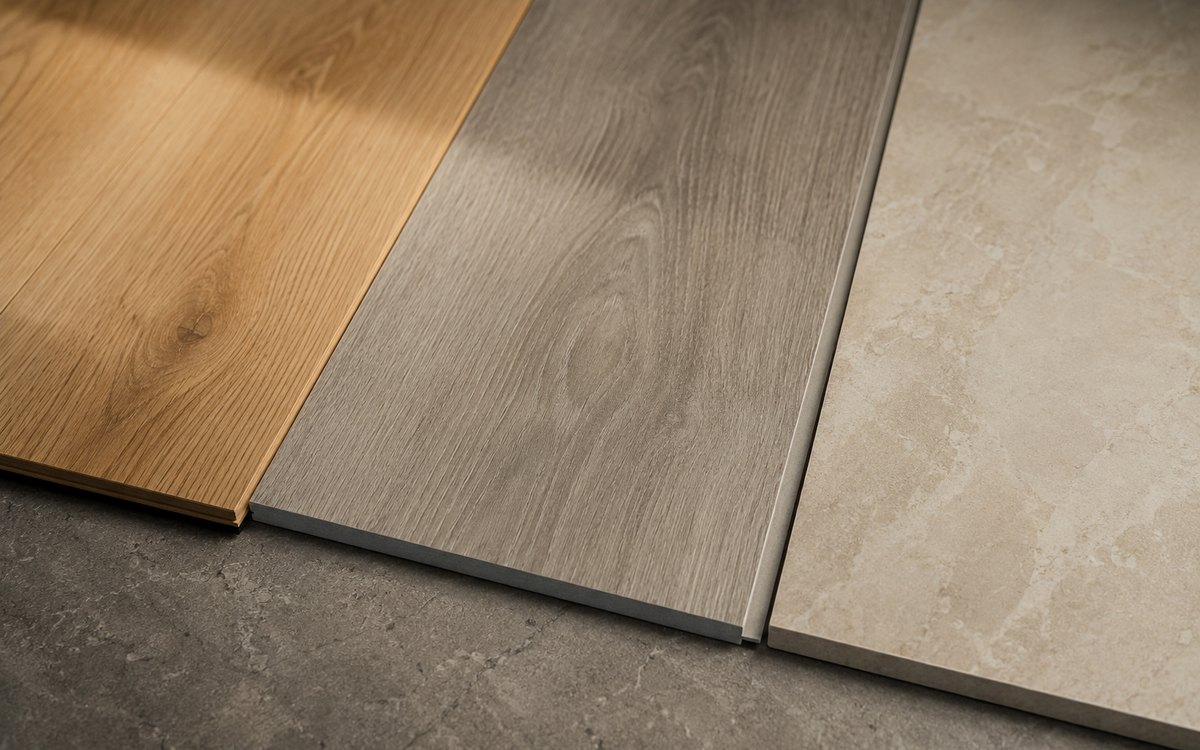
Flooring is chosen once and lived with daily, which makes it a decision worth making on facts rather than on the showroom lighting. Here is an honest comparison of the four options people actually consider.
How to compare finishes honestly
Compare four things: resistance to water, resistance to wear, comfort underfoot and total cost of ownership over ten years. Price per square metre alone tells you very little.
Add one practical criterion: what happens when a single area is damaged. Some finishes can be repaired locally, others require lifting the whole floor.
Rigid core vinyl (SPC/LVT)
Water resistant, quiet, warm underfoot, compatible with underfloor heating, and available in convincing wood and stone patterns. Individual planks can usually be replaced.
Weak points: it needs a very flat substrate, and cheap products can dent under heavy furniture. Quality varies enormously between price levels, more than in any other category here.
Laminate
The most affordable option with a wide choice of patterns and a straightforward installation. Modern water-resistant classes handle everyday spills.
Weak points: it remains the least tolerant of standing water, it is louder underfoot without a good underlay, and damaged planks in the middle of a room are awkward to replace.
Porcelain
The most durable and the most indifferent to water. Ideal for hallways, kitchens and bathrooms, and the natural partner for underfloor heating.
Weak points: cold without heating beneath it, hard underfoot, and unforgiving of dropped crockery. Installation costs more and takes longer than any of the alternatives.
Microcement and poured floors
A seamless surface looks striking and suits contemporary interiors, but it demands a perfect substrate and an experienced installer. Execution errors are visible immediately and are corrected by redoing the whole floor.
Cost is comparable to good porcelain. Longevity depends on the quality of the protective layer and on how the floor is used.
The numbers
Rigid core vinyl: mid-range price, high water resistance, high comfort, service life of fifteen to twenty years. Laminate: low price, moderate water resistance, moderate comfort, ten to fifteen years.
Porcelain: high installed cost, maximum water resistance, low comfort without heating, thirty years and more. Microcement: high cost, high water resistance, moderate comfort, life dependent on maintenance.
What to consider before buying
Underfloor heating is not compatible with every finish; check the manufacturer's approval. Allow five to ten per cent extra for cuts. Match the wear class to the actual room: a hallway and a bedroom have different requirements.
Always view a sample in your own lighting. Colours in a showroom and at home differ noticeably.
How to choose in five minutes
Bathroom or heavy wet use: porcelain. Kitchen and hallway: porcelain or rigid core vinyl. Living rooms and bedrooms: rigid core vinyl or laminate. Open-plan flat where a single continuous surface matters: rigid core vinyl or microcement.
Common questions
Can different finishes be combined? Yes, though a single material throughout makes a small flat feel larger.
Which is best with pets? Rigid core vinyl and porcelain resist scratches best.
Is expensive laminate better than cheap vinyl? Usually yes. Quality within a category matters more than the category itself.
Comments
No comments yet — be the first.