Is a Design Project Worth It? Designer vs. Building Crew
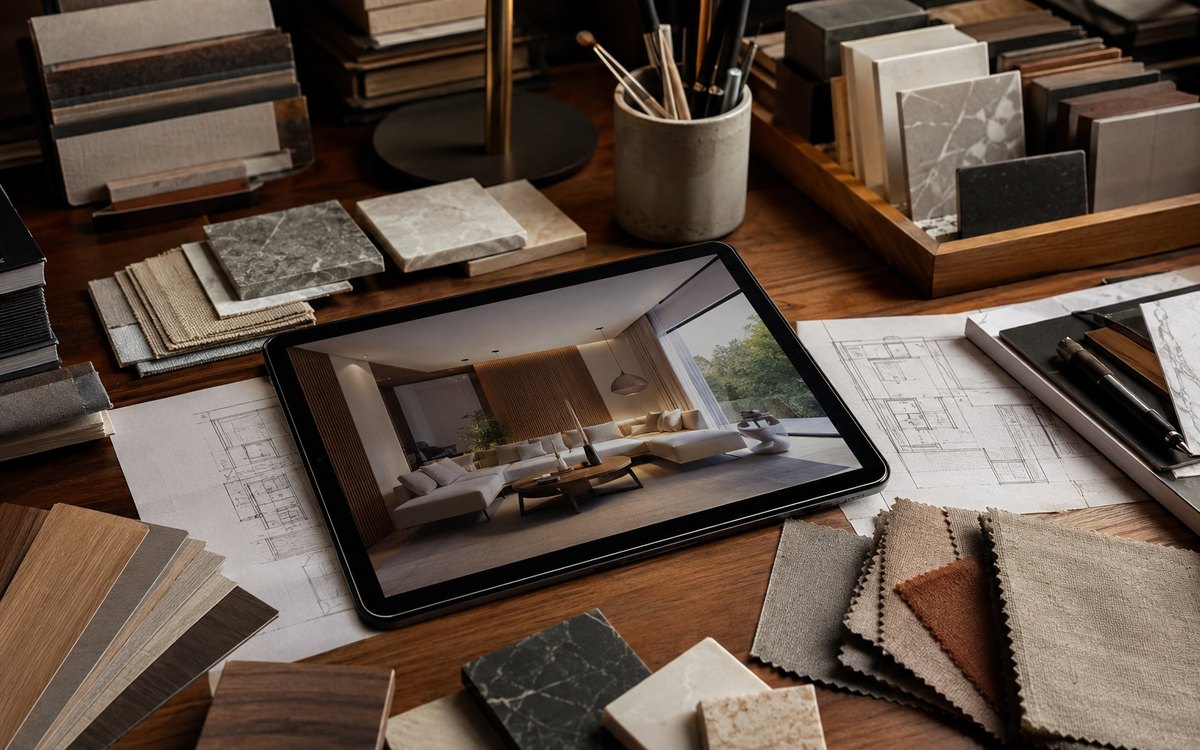
The question is almost always framed as an expense: should I pay a designer or put that money into materials? The useful way to look at it is different. A design project is not decoration, it is the set of decisions that will be made anyway, either on paper in advance or on site in a hurry.
What a design project includes
A measured survey. Demolition and construction plans. A furniture layout. Socket and switch positions. A lighting plan with circuits. Flooring and ceiling plans. Tile setting-out drawings. A schedule of materials and finishes. Visualisations.
The renders are the part clients look at. The drawings are the part the crew builds from.
How a project saves money
By preventing rework. Every position fixed on a drawing is a decision that does not have to be improvised while three people wait on site.
It also prevents over-buying: a proper schedule of materials states quantities, including the allowance for cuts. Guessing at quantities routinely costs more than the design fee.
Does it pay for itself
On a full renovation, usually yes. The fee is typically a modest share of the total budget, while the cost of two or three reworked stages is not.
On a light cosmetic refresh, often not. If you are painting walls and changing floors in a flat whose layout already works, drawings add little.
Designer vs. building crew
A crew executes. A designer decides. Both are necessary, and problems appear when one is asked to do the other's job.
A good crew will tell you honestly that they can build anything but will not take responsibility for whether the wardrobe fits the hallway once the walls are levelled.
What happens without a project
Decisions get made in sequence, under time pressure. Sockets are marked during construction, furniture is chosen after the finishes, and mismatches surface when correcting them is expensive.
The usual result is an interior assembled from individually good decisions that do not relate to each other.
How a project differs from pretty pictures
Visualisations are the shop window. The working part is the drawings, and a project without them saves neither money nor nerves.
When comparing proposals, ask exactly which drawings are included. The word "project" covers everything from a mood board to a full technical set.
Cost and duration
A full design project usually takes from four to ten weeks depending on the size of the property and how quickly decisions are made. Pricing is normally per square metre and varies widely by scope.
Author supervision, where the designer checks the work in progress, is charged separately and is worth having on complex projects.
When you can skip it
Cosmetic refresh with no layout changes. A small flat where the layout is obvious. A rental property where the priority is durability rather than character.
Even then, a socket plan and a lighting plan are worth drawing. They cost little and prevent the most common regrets.
How to choose a designer
Look at completed projects rather than renders, ideally in person. Ask what the working set includes. Check how they handle changes and whether supervision is available.
And talk to them: you will be making dozens of decisions together, and how easily you communicate matters more than portfolio style.
Common questions
Can I use the drawings with any crew? Yes, that is the point of a proper technical set.
Will a designer save me the fee in materials? Sometimes, mostly through accurate quantities and avoided rework, though there is no guarantee.
Do I need supervision? On complex projects it is the difference between the drawings being followed and being interpreted.
Comments
No comments yet — be the first.