Contemporary Interiors in 2026: Trends, Anti-Trends and Materials That Are Over
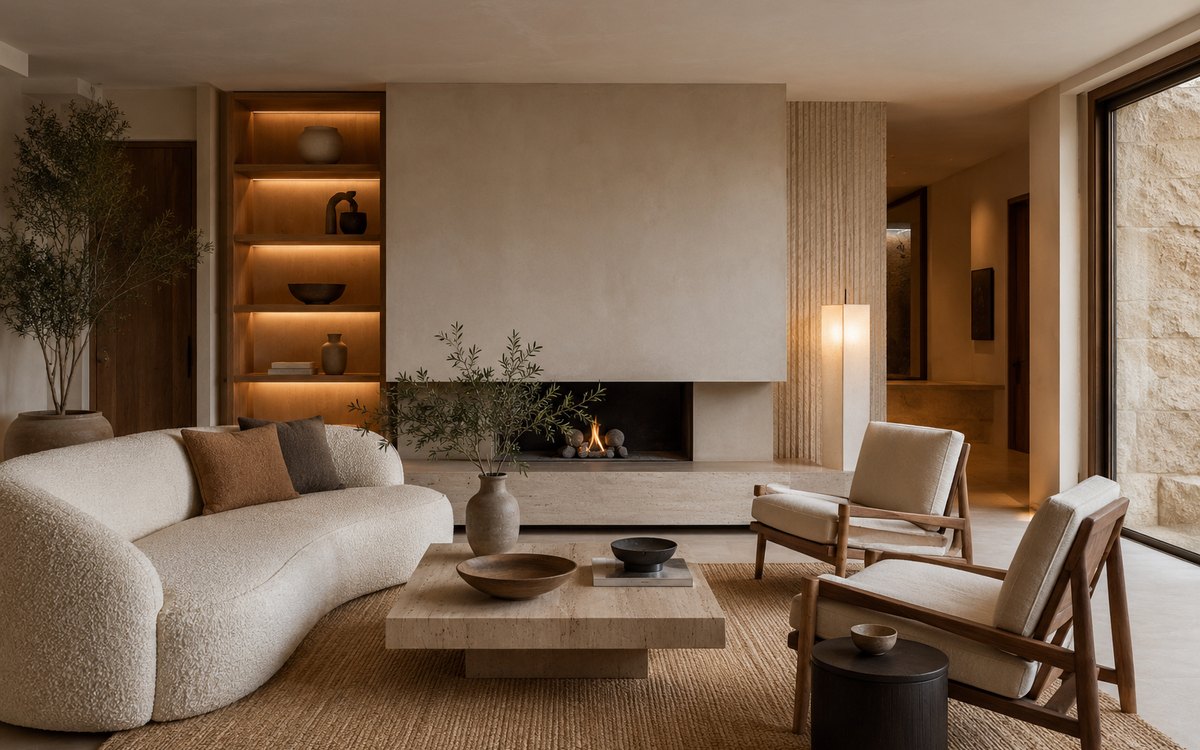
Trends are useful when they solve something and expensive when they are followed literally. Here is what defines contemporary interiors in 2026, what has quietly gone out of date, and how to apply any of it without rebuilding your home.
What is current in 2026
Calm, layered neutrals with one deep accent. Natural and honest materials: stone, wood, plaster, ceramics. Rounded forms in furniture and joinery. Integrated storage rather than standalone pieces. Lighting treated as architecture, not as a fitting bought last.
Kitchens are becoming quieter: fewer visible appliances, more concealed units, worktops in a single continuous material.
What sits behind the trends
Two forces: the wish for a home that feels restful, and the practical need for durability. Both push in the same direction, towards fewer materials, better quality and less visual noise.
That is why the current look is not a style so much as a way of editing. Anything that does not earn its place is removed.
Materials that will last
Porcelain in large formats, engineered timber, mineral plaster, quartz aggregate, solid brass and steel hardware. These have been reliable for decades and will still look considered when the current palette moves on.
The safest rule remains: spend on what is hard to replace, experiment with what is easy.
Anti-trends: what makes an interior look cheap
Glossy plastic surfaces everywhere. Multi-level plasterboard ceilings with hidden strips used without purpose. Imitation stone with an obviously repeating pattern. Too many accent colours in one room. Feature walls chosen at random.
The common thread is imitation. A modest honest material almost always reads better than an elaborate copy of an expensive one.
Materials that are over
Large-scale gloss on kitchen fronts, heavily veined imitation marble on every surface, dark red-toned wood laminate, decorative columns and cornices in otherwise plain rooms.
None of these are wrong in themselves; they simply date a room instantly, which matters if you are renovating for ten years rather than for a photograph.
Light: the main theme of the year
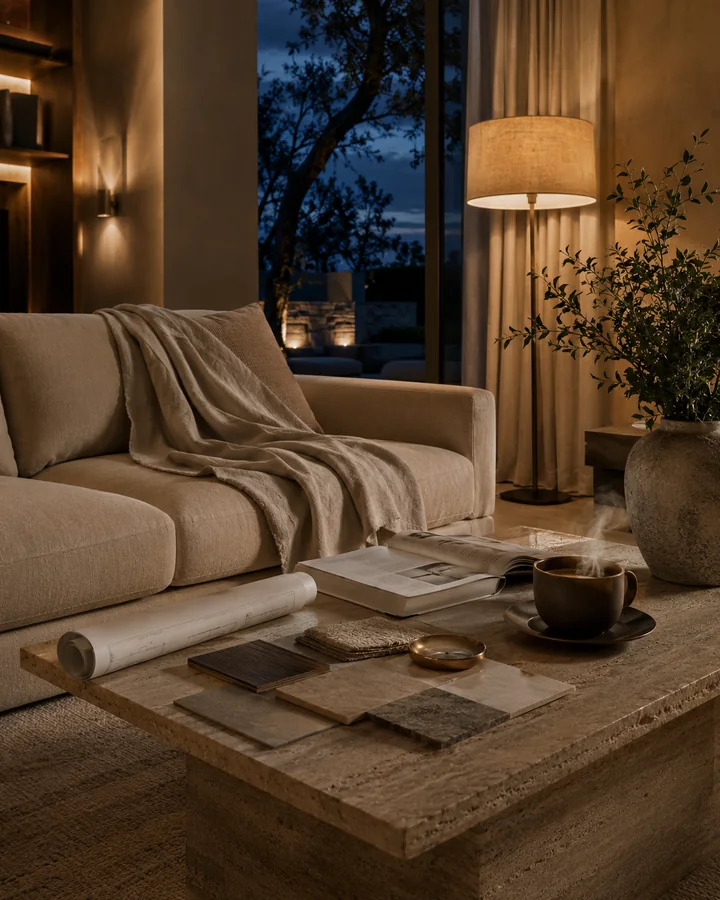
Layered lighting has moved from a designer preference to a baseline expectation: general, task and accent light, each on its own circuit, most of it dimmable.
Track systems and slim recessed profiles have replaced the single central fitting. Warm temperatures dominate in living spaces, with neutral light reserved for kitchens and bathrooms.
Colour and textiles
Muted greens, clay and terracotta tones, warm greys and deep blues. Textiles carry the texture: linen, wool, boucle, heavy cotton.
Textiles are also the cheapest way to follow a trend. Curtains, cushions and rugs can be replaced in an afternoon; a tiled wall cannot.
What never goes out of fashion
A calm base, good light, well-planned storage and natural materials work regardless of the year. They are what decide whether an interior still looks expensive in five years.
How to apply trends without rebuilding
Put the trend into what is easy to change: textiles, decor, lighting, the colour of a single wall. Keep everything that requires demolition in the category of things you like independently of fashion.
How to tell whether a trend suits you
Three questions: will I maintain this, will it survive my daily routine, and will I still like it in a year? A fluted kitchen front photographs beautifully and demands regular cleaning.
Common questions
Is it worth following trends at all? Selectively. Use them for atmosphere, not for structure.
Which trend gives the biggest visible effect? A properly layered lighting scheme, by a wide margin.
How often do interiors need updating? Textiles and decor every few years, finishes every ten to fifteen, layout only when life changes.
Comments
No comments yet — be the first.